
The pharmaceutical industry in United Kingdom operates under some of the world’s most stringent regulatory and quality frameworks. Manufacturers producing oral liquid dosage forms must ensure absolute precision, hygiene, and repeatability across every batch. Liquid and Syrup Manufacturing Plants from Technogen Enterprise are engineered to support these exacting requirements, delivering reliable, scalable, and GMP-compliant solutions for pharmaceutical facilities across the UK.
These plants are widely suitable for manufacturers operating in established UK pharmaceutical and life-science hubs such as London, Cambridge, Oxford, Manchester, Birmingham, Liverpool, Leeds, Nottingham, Leicester, Coventry, and Sheffield, where compliance, process control, and efficiency are business-critical.
What are Liquid and Syrup Manufacturing Plants?
Liquid and Syrup Manufacturing Plants are integrated pharmaceutical processing systems designed for the controlled production of oral liquid formulations. These include syrups, suspensions, solutions, emulsions, drops, linctuses, elixirs, and mixtures.
The core objective of these plants is to ensure:
Accurate formulation
Controlled temperature and mixing
Minimal manual handling
Effective cleaning and sterilisation
Consistent batch-to-batch quality
Such systems are essential for pharmaceutical manufacturers supplying regulated markets such as United Kingdom and Europe.
Working Philosophy and Process Control
The design philosophy behind Technogen Enterprise’s Liquid and Syrup Manufacturing Plants focuses on two critical quality drivers:
Minimising Manual Handling
Automated transfer, mixing, filtration, and cleaning systems significantly reduce operator intervention, lowering contamination risk and human error.Ensuring Effective Cleanliness
Full CIP and SIP capability across vessels ensures validated, repeatable cleaning and sterilisation, supporting compliance with UK GMP and MHRA expectations.
Typical Process Flow in Liquid & Syrup Manufacturing
Step 1: Sugar Syrup Preparation
Sugar and purified water are charged into the Sugar Melting Vessel (Jacketed). Controlled heating through the jacket and bottom-mounted agitation ensures rapid dissolution and uniform syrup formation. Temperature is continuously monitored and regulated.
Step 2: Syrup Filtration
The prepared sugar syrup passes through the Inline Sugar Syrup Filter, removing undissolved particles and ensuring clarity before formulation.
Step 3: Formulation in Syrup Manufacturing Vessel
Filtered syrup is transferred to the Syrup Manufacturing Vessel (Jacketed). APIs and excipients are added in a controlled sequence. High-efficiency agitation ensures complete dissolution, dispersion, or emulsification depending on the formulation type. Optional inline homogenisation may be used for enhanced stability.
Step 4: Final Filtration
The formulated product is passed through the Zero Hold-Up SS Filter Press, removing fine particulates and ensuring final clarity and purity.
Step 5: Storage Prior to Filling
Finished liquid is transferred to the Storage Vessel (Non-Jacketed), where homogeneity is maintained until filling and packaging operations commence.
Step 6: CIP / SIP Cycle
After batch completion, all vessels and pipelines undergo automated cleaning and sterilisation, reducing downtime and ensuring cross-contamination control.
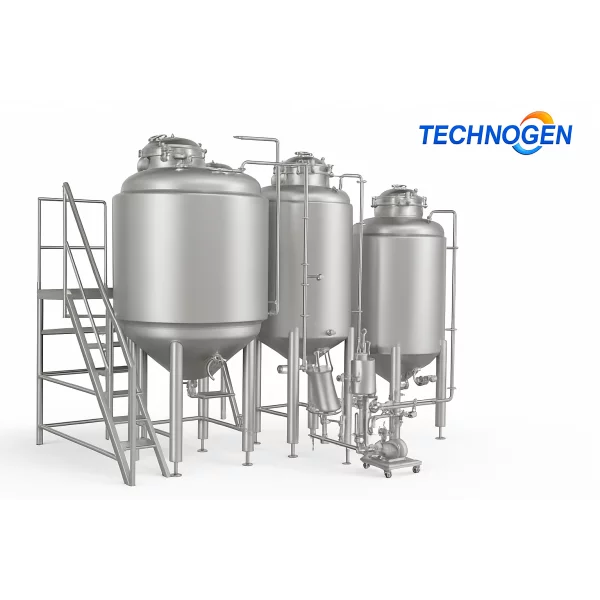
Core Equipment Supplied in the Plant
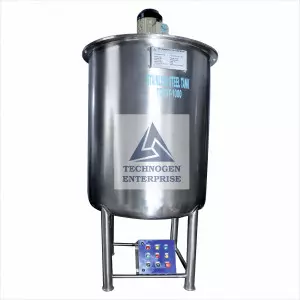
Syrup Manufacturing Vessel (Jacketed)
Sugar Melting Vessel (Jacketed)
Storage Vessel (Non-Jacketed)
Zero Hold-Up Design SS Filter Press
Inline Sugar Syrup Filter
Transfer Pump (Lobe Pump)
Standard Control Panel
Working Platform
Optional Inline Homogeniser
Key Technical Highlights (As Per Provided Specifications)
Contact parts manufactured from SS 316
Non-contact parts manufactured from SS 304
ASME SEC VIII DIV 1 vessel design
CIP & SIP compatible vessels
Bottom-mounted propeller agitators
Double cartridge, water-cooled mechanical seals
USFDA-approved food-grade silicone gaskets
Variable-speed agitation via frequency drives
All specifications are maintained exactly as provided, without alteration or assumption.
Applications / Industries in United Kingdom
Pharmaceutical Manufacturing
Oral syrups and solutions
Suspensions and emulsions
Paediatric and geriatric liquid formulations
Nutraceutical & Herbal Products
Herbal syrups
Nutritional liquids and tonics
Specialty Chemical & Healthcare Liquids
Diagnostic liquids
Medical-grade liquid formulations
These plants are suitable for UK-based manufacturers serving domestic and export markets.
Advantages for UK Pharmaceutical Manufacturers
Supports compliance with UK GMP and global regulatory standards
Reduces batch contamination risk through automated handling
Ensures consistent formulation quality and repeatability
Scalable capacity from 50 litres to 20,000 litres
Efficient cleaning reduces production downtime
Designed for long-term, high-duty pharmaceutical operation
Why Choose Technogen Enterprise for United Kingdom?
Technogen Enterprise designs liquid manufacturing plants with a strong understanding of regulated pharmaceutical production environments. Each system is engineered for durability, hygiene, and process control, supporting pharmaceutical companies across United Kingdom’s major life-science clusters, including Cambridge–Oxford, the Midlands, and the North West.
Plants are supplied with comprehensive documentation support and are suitable for validation-driven facilities requiring controlled, auditable production systems.
7. Frequently Asked Questions (FAQs)
Q1. Are these Liquid and Syrup Manufacturing Plants suitable for UK GMP facilities?
Yes, the design philosophy supports GMP-compliant pharmaceutical manufacturing environments.
Q2. What capacity ranges are available?
Plants can be configured from 50 litres up to 20,000 litres.
Q3. Are CIP and SIP supported?
Yes, all vessels are designed for CIP and SIP operations.
Q4. Can the plant manufacture suspensions and emulsions?
Yes, optional inline homogenisation supports suspension and emulsion stability.
Q5. Are contact parts stainless steel 316?
Yes, all product contact parts are manufactured from SS 316 as specified.
Q6. Is the system suitable for export-oriented UK manufacturers?
Yes, the plant design aligns with international regulatory expectations.